Eye Level Is Buy Level: We Audited the Candy Aisles of 10 Chains So Your Wallet Doesn't Have To
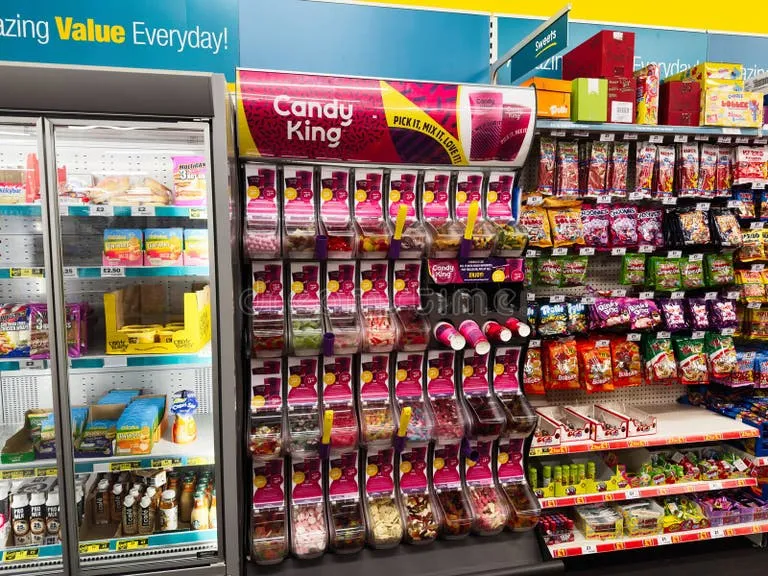
Photo: candy display checkout aisle grocery store colorful, via thumbs.dreamstime.com
There is a moment every parent knows. You're three feet from the register, cart loaded with sensible things like bread and broccoli, when a small voice says the words: "Can I get ONE thing?"
You look down. Your child is not looking at you. Your child is looking at a wall of Reese's cups positioned at exactly 42 inches off the ground — which, not coincidentally, is the average eye height of an American seven-year-old.
That's not an accident. That's architecture. And at Sugar Rush, we decided it was time someone mapped the battlefield.
The Audit: Clipboards, Tape Measures, and One Very Patient Cashier
Over three weeks, we visited ten national chains across the grocery, drugstore, and big-box spectrum — think Kroger, Walgreens, CVS, Target, Walmart, Safeway, and a few regional players — and documented every candy display we could find. We recorded the height of each product zone, whether it sat in the "begging corridor" (that long, slow checkout line designed to keep kids captive), and whether it was reachable without adult assistance.
Our findings, loosely quantified:
- Checkout lanes at drugstores were the most aggressive. Walgreens and CVS averaged 11+ impulse candy facings per lane, with the chewiest, most grabbable items (gummy worms, fun-size packs) squarely in the 36–48 inch zone.
- Grocery stores spread the wealth. Kroger and Safeway put candy at kid height at the registers but reserved the premium chocolate — the good stuff, the stuff YOU actually want — at adult eye level, around 55–60 inches. Two different customers, two different aisles, one very efficient store.
- Big-box stores play the long game. At Walmart and Target, the checkout candy is modest. The real ambush is seasonal: the Valentine's Day aisle in January, the Easter dump bins in March. Placement rotates like a heist schedule.
- The floor is not safe either. One Target had a bottom-shelf display of fruit snacks at ankle height. Ankle height! That's toddler territory, and toddlers cannot be reasoned with.
We Asked an Expert. She Wasn't Surprised.
We spoke with Dana Ruiz, a retail merchandising consultant who has planned planograms for national snack brands for over a decade. She confirmed what our tape measures suspected.
"Checkout is the highest-value real estate per square foot in the entire store," she told us. "Retailers know shoppers make up to 60 percent of their purchase decisions in-store, and candy at the register is the last chance to capture a sale nobody walked in intending to make."
As for kid eye level? "If a child can see it, reach it, and ask for it, conversion rates go up dramatically. The pester power multiplier is real, and it's priced in." Priced in. Your toddler's tantrum has a line item in someone's quarterly spreadsheet.
Operation Parent Aisle: Does It Actually Work?
The internet loves a folk remedy, and the most popular one is this: skip the candy-filled checkout entirely and use the self-checkout or the so-called "parent aisle" — the lane stocked with batteries, stamps, and other joyless necessities.
We tested it. Fourteen store visits, alternating between the gauntlet lane and the boring lane, tracking whether we (or our recruited kid testers) bought unplanned sweets.
The results: the parent aisle strategy cut our impulse candy purchases to zero in every single trip. Zero! Not because the boring lanes lack candy entirely — a few had a sad, half-empty rack of Altoids — but because nothing at eye level whispered our names. Our kid testers, when offered a consolation trip to the vending machine outside, rated the strategy "mean but effective."
Self-checkout worked almost as well, with one caveat: the screen now asks if you want to add a candy bar, which is just the same ambush wearing a lanyard.
The Takeaway: Shop Like You're Being Hunted (Because You Are)
Here's our field-tested survival kit for your next sugar-soaked errand:
- Use the boring lanes. Batteries are cheaper than Kit Kats in the long run, emotionally speaking.
- Shop after school hours at your peril. Ruiz noted displays are planned year-round, but your willpower is not.
- Pre-negotiate. A "one treat, chosen at the start of the trip" rule turns the ambush into a planned purchase — and planned purchases don't trigger the checkout meltdown.
- Know the seasonal rotation. If you smell cinnamon in October, the holiday dump bins are near. Adjust your route.
Look, we're a dessert site. We're not anti-candy — we once deep-fried an entire state fair's worth of sweets and rated them. Candy is a joy, and joy is the whole point around here. But there's a difference between choosing a treat and being outmaneuvered by a 42-inch shelf.
Shop smart. Eat the good stuff on purpose. And if you see someone with a clipboard and tape measure in the checkout line at CVS — that's just us, doing the Lord's work.


